



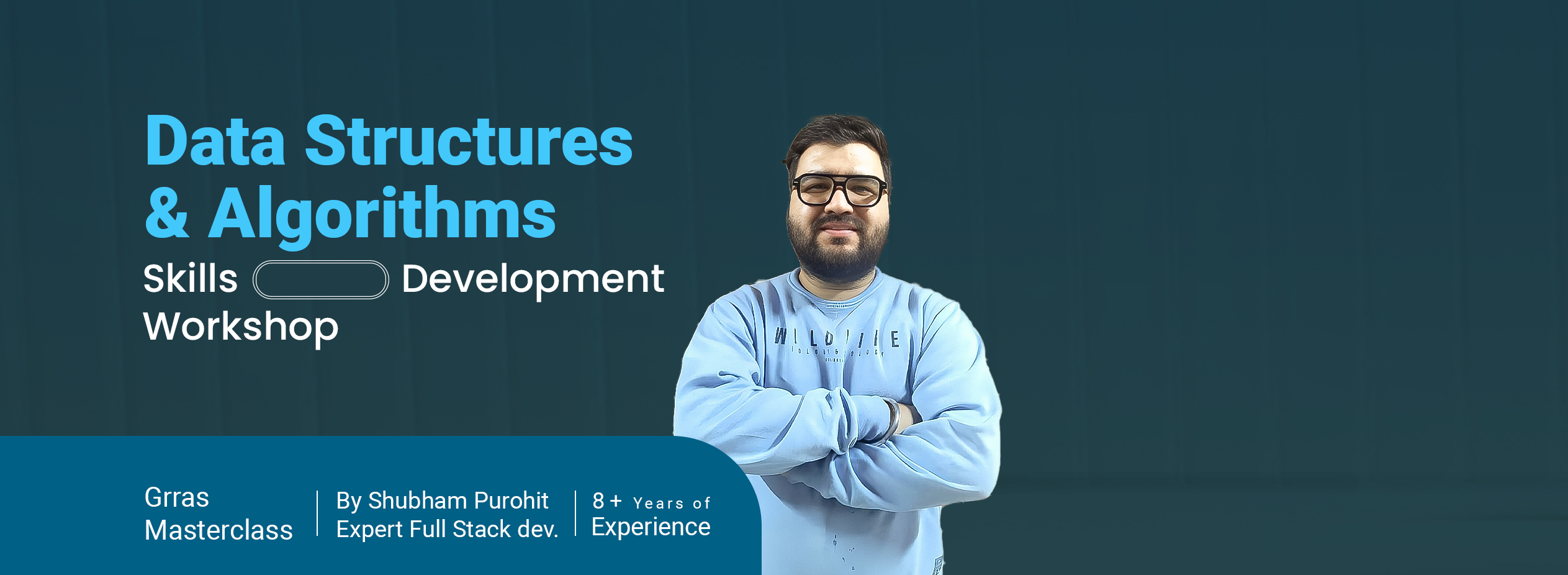
Master Backtracking: From Basics to Advanced for SDEs
1st Nov, Sat
06:25 PM - 12:53 PM
2250 registered
ISO-certified
AI Powered

Transform your career with our comprehensive Data Science, Machine Learning & Generative AI program. This hands-on, project-based course covers Python fundamentals, advanced ML algorithms, Deep Learning, NLP, and cutting-edge Generative AI with RAG. Master data preprocessing, model training, hyperparameter tuning, and deployment through real-world projects that prepare you for industry challenges.

150k+ Placemenets to Date

600+ Hiring Partners

76 Lakhs Highest Annual

Next Batch starts in November


 Duration: 4–5 months intensive program Mode: Online & Offline classes with hand -on coding Format: Theory lectures, live coding, guided practice, capstone projects, and code reviews Support: 24/7 doubt resolution and mentor guidance Assessment: Weekly assignments and capstone projectsLearning Path: Foundations → Statistics → Data Analysis → Data Visualization → Machine Learning→ Deep Learning & NLP → Gen Ai → Deployment → Projects Fresh graduates aiming to begin a career in Data Science, Analytics, or AIWorking professionals planning to shift into data-driven roles or machine learningSoftware developers looking to expand into predictive modeling and automationBusiness analysts who want deeper analytical and technical capabilityStudents pursuing computer science, IT, engineering, mathematics, or related fieldsEntrepreneurs looking to build or scale AI-powered products and solutions Use essential tools for data science and AI practice Manage databases (SQL/NoSQL) and Python data connectivity Build ML & DL models, NLP pipelines, and GenAI assistantsCreate and fine-tune GenAI applications using LLMs, embeddings, vector stores, and prompt engineering Deploy to AWS, Azure, and GCP with best-practice workflows
Descriptive Statistics
Inferential Statistics
Linear Algebra for ML
Data Engineering & Preprocessing
Exploratory Data Analysis (EDA)
Data Visualization
Introduction to Machine Learning
Supervised Learning
Unsupervised Learning
Model Optimization & Deployment – Tune models for best results and deployment for real time usage.
Text Preprocessing & Feature Engineering
Building NLP Models
Neural Network Fundamentals
Building & Training Neural Networks
Convolutional Neural Networks (CNNs)
Recurrent Neural Networks (RNNs) & Transformers
Fine-Tuning Large Language Models
Retrieval-Augmented Generation (RAG)
Building AI-Powered Assistants






Apply your learning through 2 capstone projects: create comprehensive analytical reports from real-world datasets and develop an intelligent RAG-powered chatbot, demonstrating end-to-end data science and AI implementation skills
The Car Price Predictor project is a web-based application that allows users to estimate the selling price of used cars by inputting key details, such as mileage and year of manufacture. The application leverages a linear regression model, trained on historical data, to generate price predictions. Users can interact with…
The Loan Prediction project is a web-based application that leverages data science to estimate loan approval outcomes. Users enter vital financial details, such as income and credit score, into an intuitive interface built with Flask. The system employs a Random Forest model, developed using Scikit-learn, which is trained on historical…
The Wine Quality Predictor project is a machine learning-based application designed to assess wine quality based on key chemical properties. Using a linear regression model built with Scikit-learn, the system analyzes features like acidity, alcohol content, and pH level to estimate a quality score. The project evaluates the model's accuracy…
The IPL Score Predictor project is a machine learning-based model designed to estimate the final score of an IPL match based on key in-game factors. Using a linear regression model built with Scikit-learn, the system analyzes inputs like current runs, wickets, and overs to predict the total score at the…
The Movie Magic project is a machine learning-powered recommendation system designed to suggest movies based on user preferences and past ratings. Using collaborative filtering and content-based recommendation techniques, the model analyzes user behavior, movie details, and rating patterns to uncover personalized movie suggestions. The system evaluates its recommendation accuracy by…
The E-Commerce Customer Spending Predictor is a machine learning-based project that helps businesses understand and forecast customer spending behavior. Using a linear regression model built with Scikit-learn, the system analyzes key factors such as session length, time spent on the app, and other user interactions to estimate yearly spending. This…
The Diabetes Prediction project is a machine learning-based model designed to assess the likelihood of diabetes in individuals based on key health indicators. The dataset, sourced from Kaggle, originates from the National Institute of Diabetes and Digestive and Kidney Diseases and includes features such as Number of Pregnancies, Insulin Level,…
The Arrhythmia Classification project leverages machine learning to detect and classify different types of arrhythmia using ECG data. The dataset consists of 452 samples and 16 classes, including both normal and various arrhythmia conditions. A major challenge is the high-dimensional nature of the data, with 279 features exceeding the number…
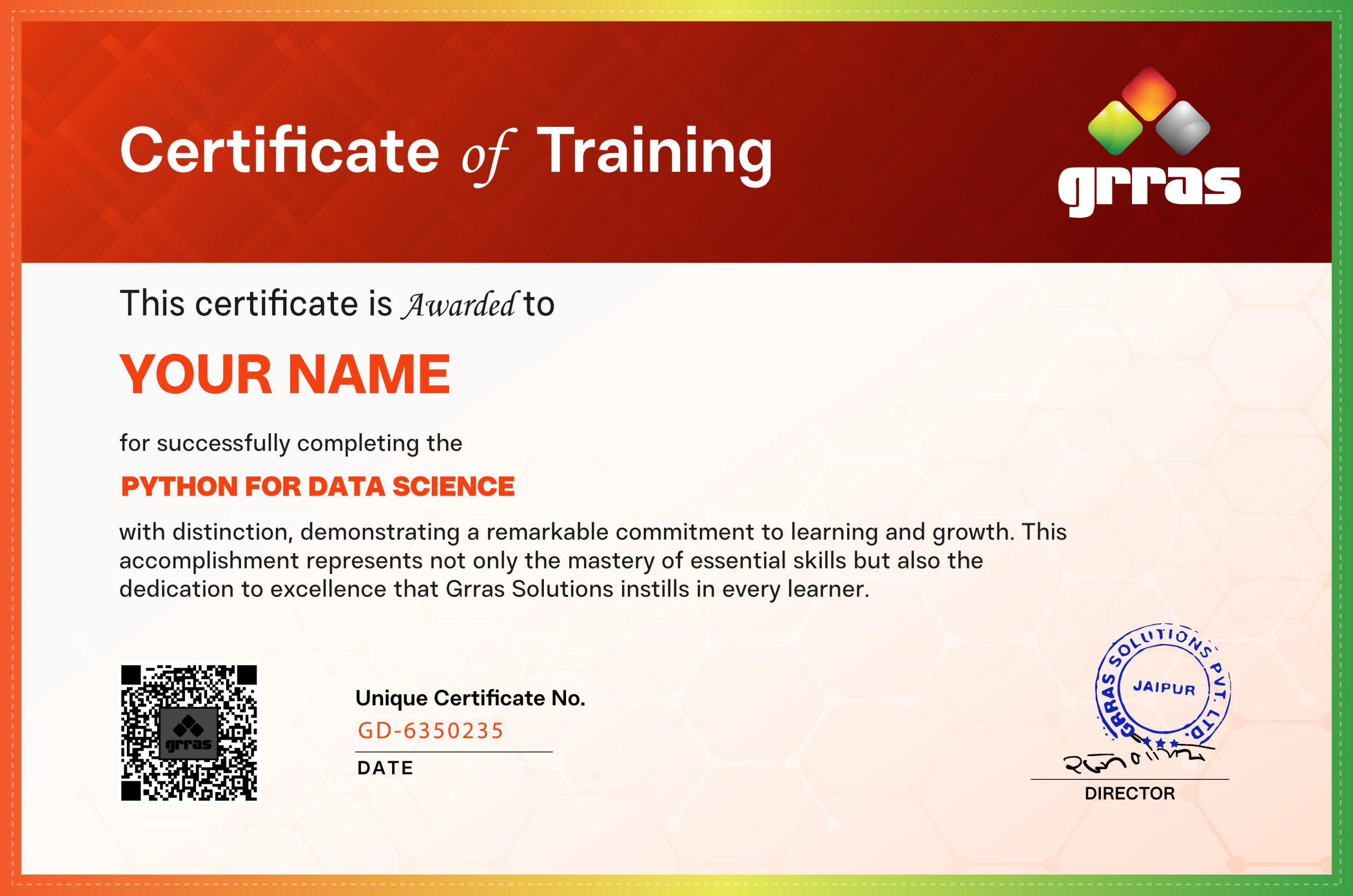
Earn an industry-recognized Data Science Certification that validates your expertise in data analysis, machine learning, and data visualization. This credential highlights your proficiency in essential tools like Python, SQL, Power BI, and Tableau, giving you a competitive edge in the job market. Whether you’re starting your career or advancing in your field, this certification demonstrates your ability to solve real-world business problems and opens doors to high-paying roles at top companies. Build credibility, gain confidence, and accelerate your journey to becoming a data-driven professional.

Professionals Trained

Countries & Counting

Corporate Served
Master the full spectrum from databases to Generative AI through 8 comprehensive modules covering 400+ hours of content with hands-on projects and real-world applications.
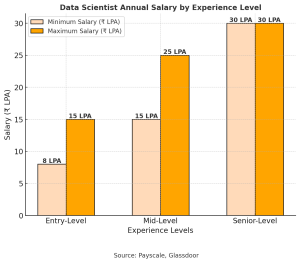
₹8–15 LPA (Entry-Level), ₹15–25 LPA (Mid-Level), ₹30+ LPA (Senior-Level)

Data Scientists extract insights from structured and unstructured data using Python, R, SQL, and machine learning frameworks to drive strategic decision-making.

₹6–15 LPA (Entry-Level), ₹15–25 LPA (Mid-Level), ₹25–40+ LPA (Senior-Level)

Machine Learning Engineers develop predictive models, design algorithms, and deploy AI solutions using tools like TensorFlow, PyTorch, and Scikit-learn.
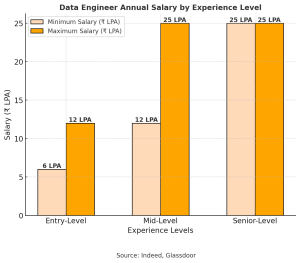
₹6–12 LPA (Entry-Level), ₹12–25 LPA (Mid-Level), ₹25+ LPA (Senior-Level)
Data Engineers build scalable data pipelines, manage databases, and optimize data flows for analysis.

₹8–20 LPA (Entry-Level), ₹20–35 LPA (Mid-Level), ₹35+ LPA (Senior-Level)

AI Specialists design and develop intelligent systems, focusing on natural language processing, computer vision, and AI-driven solutions.
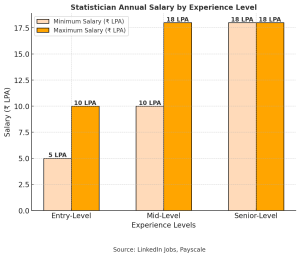
₹5–10 LPA (Entry-Level), ₹10–18 LPA (Mid-Level), ₹18+ LPA (Senior-Level)

Statisticians use statistical methods and tools to analyze data, interpret results, and make recommendations for business and research purposes.
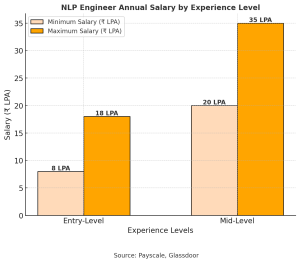
₹8–18 LPA (Entry-Level), ₹20–35+ LPA (Mid-Level)

NLP Engineers work on language-based AI systems, such as chatbots, sentiment analysis tools, and speech-to-text systems, using Python and NLP libraries.
Master the full spectrum from databases to Generative AI through 8 comprehensive modules covering 400+ hours of content with hands-on projects and real-world applications.
₹8–15 LPA (Entry-Level), ₹15–25 LPA (Mid-Level), ₹30+ LPA (Senior-Level)
Data Scientists extract insights from structured and unstructured data using Python, R, SQL, and machine learning frameworks to drive strategic decision-making.
₹6–15 LPA (Entry-Level), ₹15–25 LPA (Mid-Level), ₹25–40+ LPA (Senior-Level)
Machine Learning Engineers develop predictive models, design algorithms, and deploy AI solutions using tools like TensorFlow, PyTorch, and Scikit-learn.
₹6–12 LPA (Entry-Level), ₹12–25 LPA (Mid-Level), ₹25+ LPA (Senior-Level)
Data Engineers build scalable data pipelines, manage databases, and optimize data flows for analysis.
₹8–20 LPA (Entry-Level), ₹20–35 LPA (Mid-Level), ₹35+ LPA (Senior-Level)
AI Specialists design and develop intelligent systems, focusing on natural language processing, computer vision, and AI-driven solutions.
₹5–10 LPA (Entry-Level), ₹10–18 LPA (Mid-Level), ₹18+ LPA (Senior-Level)
Statisticians use statistical methods and tools to analyze data, interpret results, and make recommendations for business and research purposes.
₹8–18 LPA (Entry-Level), ₹20–35+ LPA (Mid-Level)
NLP Engineers work on language-based AI systems, such as chatbots, sentiment analysis tools, and speech-to-text systems, using Python and NLP libraries.
Navigate your professional journey with a comprehensive guide that transforms learning into opportunity. Discover proven strategies to build skills, gain experience, and secure your ideal position in today’s competitive job market.
 Building Strong Foundation
Focus on industry-relevant skills

Real-world projects to implement learned concepts.

Weekly tests to assess progress

 Sharpening Interview Readiness
Mock sessions with real-time feedback from experts

Host industry experts for advanced technical guidance

Focus on problem-solving, critical thinking, and domain expertise

 Communication & Aptitude Skill Development
Through interactive classes, students enhance both verbal and non-verbal communication, while also learning to present their ideas clearly, confidently, and effectively.

Enhances students' problem-solving, analytical thinking, and numerical ability-preparing them for competitive exams and placement tests.
 Resume building masterclasses
Help students structure professional, impactful resumes

 Bridging the Gap
* Partner with top companies for hiring pipelines * Conduct webinars and sessions with recruiters
* Connect candidates to aligned opportunities * Organize hiring events and recruitment drives
 Advance interview boot camp
Equip students to handle high-pressure interview situations
Prepare students for various interview formats, including case studies, coding rounds, and group discussions
 Personalized 1:1 guidance
* Address specific weaknesses and barriers to success. * Develop personalized improvement plans
Focus on industry-relevant skills
Real-world projects to implement learned concepts.
Weekly tests to assess progress
Mock sessions with real-time feedback from experts
Host industry experts for advanced technical guidance
Focus on problem-solving, critical thinking, and domain expertise
Through interactive classes, students enhance both verbal and non-verbal communication, while also learning to present their ideas clearly, confidently, and effectively.
Enhances students' problem-solving, analytical thinking, and numerical ability-preparing them for competitive exams and placement tests.
Help students structure professional, impactful resumes
* Partner with top companies for hiring pipelines * Conduct webinars and sessions with recruiters
* Connect candidates to aligned opportunities * Organize hiring events and recruitment drives
Equip students to handle high-pressure interview situations
Prepare students for various interview formats, including case studies, coding rounds, and group discussions
* Address specific weaknesses and barriers to success. * Develop personalized improvement plans









The demand for skilled data science professionals is skyrocketing as industries leverage data to gain strategic insights and optimize operations. Frompredictive analytics to AI-powered solutions, data science is transforming business.
Master a curriculum crafted and constantly updated by industry experts to match real-world trends, ensuring every concept and project builds job-ready, future-proof skills.
Receive one-on-one mentorship, resume reviews, mock interviews, and complete placement assistance through our 500+ hiring partners to accelerate your tech career.
Learn directly from certified professionals with years of hands-on experience who guide you through every module, project, and career milestone personally.
Gain practical exposure by working on live, industry-grade projects that mirror real business challenges, strengthening your technical execution and problem-solving abilities.
Join thousands of successful learners who have launched rewarding tech careers through Grras. Our consistent placement results, trusted partnerships, and alumni success stories speak for the quality of our training.
Our extensive network of hiring partners spans various industries, offering diverse opportunities to kickstart your career.




























Copyright © 2026 GRRAS Solutions Pvt. Ltd.






 Whatsapp us
 Call us
 Enquire Now